

Why Isn’t Ireland Harnessing the Sea?
Ireland has some of Europe’s most expensive electricity, an ocean full of renewable energy potential, and a growing concentration of data centres. So why are we still waiting to make better use of the sea?
Ireland is an island surrounded by one of the most powerful renewable energy resources on Earth: the Atlantic Ocean.
We have strong offshore winds, enormous waves, and thousands of kilometres of coastline. Yet Irish households continue to pay some of the highest electricity prices in Europe.
Meanwhile, countries such as China are developing offshore wind farms, experimenting with electricity generation from ocean waves, and even placing data centres beneath the sea.
This raises an obvious question:
If Ireland is surrounded by renewable energy, why are we paying so much for electricity while so much of that potential remains untapped?
Too Big! Too Close! Too Loud!
Across Ireland, communities have raised concerns about the construction of wind turbines near their homes.
The objections are familiar: turbines are too tall, too close to residential properties, too noisy, and too intrusive on the landscape.
Other concerns include shadow flicker, the flashing effect caused when rotating turbine blades interrupt sunlight, and the potential impact on wildlife and local environments.
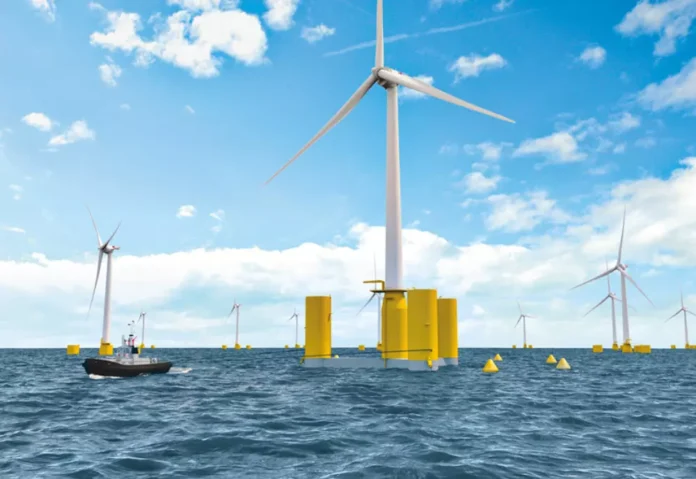
So why not move more of our wind energy infrastructure offshore?
Out at sea, turbines can be positioned farther from residential areas, reducing many of the conflicts associated with onshore wind farms.
Offshore winds are also frequently stronger and more consistent, allowing larger turbines to generate substantial amounts of electricity.
Of course, offshore wind farms are more expensive to construct and maintain. They also require careful environmental assessments and consideration of fishing communities.
However, considering the enormous sums Ireland receives from the EU for all the “enrichment” it has been importing in recent years — those countless doctors and engineers — perhaps the Government could finally put some of that money to good use and build offshore infrastructure that actually benefits the Irish people.
But these challenges have not stopped other countries from developing offshore wind energy on a massive scale.
Why should Ireland, an island with exceptional offshore wind resources, be moving so slowly?
Ireland’s Offshore Wind Farm Is More Than 20 Years Old
Here is something that might surprise many Irish electricity customers.
Ireland already has an offshore wind farm.
The Arklow Bank Wind Park, located off the coast of County Wicklow, began operating in 2004.
It consists of just seven turbines with a combined capacity of 25 megawatts.
More than two decades later, it remains Ireland’s only operational offshore wind farm.
There are plans for much larger developments, including Codling Wind Park, Dublin Array, North Irish Sea Array, Sceirde Rocks and Oriel Wind Farm.
Together, these projects could deliver several gigawatts of renewable electricity.
However, their development has been slow.
In February 2026, the Irish Government indicated that major offshore projects currently in development might not become operational until 2031 or 2032.
That means Ireland could spend almost three decades with little more than its original seven offshore turbines generating electricity at sea.
For a country surrounded by water and struggling with electricity costs, that deserves an explanation.
Why Stop at Wind? The Ocean Itself Can Generate Electricity
While Ireland continues developing offshore wind farms, another renewable energy technology deserves much greater attention.
Wave energy.
Unlike wind turbines, which capture the movement of air, wave energy converters capture the movement of the sea.
Depending on their design, these devices can float on the surface, move up and down with the waves, or use underwater mechanisms to convert ocean movement into electricity.
China has already demonstrated large-scale experimental systems.
In 2023, China began testing Nankun, a floating wave energy platform designed to generate electricity from ocean waves.
Japan has also been researching innovative wave energy technologies, including systems that use gyroscopic mechanisms inside floating structures.
And Ireland?
We have some of Europe’s strongest wave energy resources, particularly along our western Atlantic coastline.
According to the Sustainable Energy Authority of Ireland (SEAI), an earlier national assessment identified a theoretical wave energy development potential of approximately 31,100 megawatts.
China Is Putting Data Centres Underwater. Why Isn’t Ireland Investigating the Same Idea?
Perhaps the most interesting development comes from China.
In May 2026, a wind-powered underwater data centre began operating off the coast of Shanghai.
The facility, with a reported capacity of 24 megawatts, is located approximately 10 metres underwater and more than 10 kilometres offshore.
It uses electricity from offshore wind generation, while the surrounding seawater provides natural cooling.
According to the project’s developers, this arrangement can significantly reduce the electricity required for cooling and eliminate the need for conventional freshwater-based cooling systems.
This is particularly interesting for Ireland.
Our country has become one of Europe’s major data centre locations, with enormous facilities supporting global technology companies.
These facilities require substantial amounts of electricity, and their cooling systems also consume energy.
Offshore wind turbines generate electricity above the water.
Beneath the surface, specially designed data centre modules use seawater for cooling.
The question is not whether Ireland should immediately move its data centres underwater. It is whether this possibility has been seriously examined.
Why Not Use All Three?
Ireland does not have to choose between offshore wind, wave energy and innovative data centre infrastructure.
In principle, all three could form part of a future offshore energy strategy.
Together, these technologies could create new opportunities worth investigating
Ireland has the wind.
Ireland has the waves.
Ireland has the ocean.
And Ireland certainly has the data centres.
What Ireland needs now are clear answers about why its offshore energy potential remains so underdeveloped, whether innovative alternatives have been properly assessed, and who will ultimately benefit from future investment.
Because for Irish households facing some of Europe’s highest electricity bills, the question is no longer simply how much energy we can generate.
It is why a country surrounded by so much energy potential is still paying so much for electricity.