
Two million emergency booklets. Food. Water. Cash. Power banks. Radios. Evacuation plans. The Government says there is no reason to be alarmed. So why is this happening now?
Something unusual is landing on Irish doorsteps.
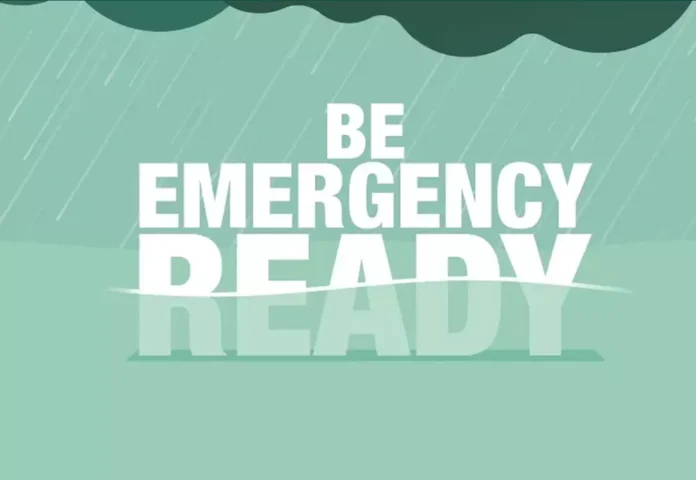
Beginning on 21 September 2026, approximately 2.2 million households across Ireland are being sent a Government booklet titled “Be Emergency Ready.” The campaign was launched by the Department of Defence’s Office of Emergency Planning and is designed to tell ordinary households how to prepare for serious disruption.
Read the: Be Emergency Ready Booklet
The official message is reassuring.
- Don’t panic.
- Just prepare.
- Prepare food.
- Prepare water.
- Have a torch.
- Keep a power bank charged.
- Know where your important documents are.
- Have emergency contact numbers written down.
- Think about how you would communicate if normal services stopped working.
- Know what you would do if you suddenly had to leave your home.
And perhaps most interestingly of all: be prepared for electricity, water, communications and transport systems to become unavailable.
Nothing to worry about, apparently.
But there is one perfectly reasonable question nobody should be embarrassed to ask:
Why now?
Ireland has had storms before.
We have had floods before.
We have had electricity cuts before.
Irish households have somehow survived decades without the Government mailing an emergency-preparedness manual to practically every home in the country.
Previous campaigns focused largely on seasonal risks through programmes such as Be Winter Ready and Be Summer Ready.
This one is different.
The Government has replaced that seasonal approach with a broader, year-round preparedness campaign covering disruption to electricity, water, communications, transport and other essential services. Officials say the experience of major events such as Storm Éowyn in January 2025 demonstrated how vulnerable communities can become when several systems fail at once.
Perfectly sensible.
But keep reading.
This Isn’t Happening Only in Ireland
The Irish campaign does not exist in isolation.
Government material explicitly says the initiative reflects a “growing focus across Europe on public preparedness and societal resilience.” It also aligns with the European Union’s broader Preparedness Union Strategy.
That detail changes the context considerably.
This isn’t simply your local council reminding you to buy candles before a winter storm.
Across Europe, governments have increasingly begun talking about resilience, preparedness, supply disruption, cyber incidents, infrastructure failure and the ability of civilians to cope independently during emergencies.
And now Ireland is sending physical emergency instructions into millions of homes.
Again, perhaps there is nothing sinister about that.
Perhaps governments have simply realised that modern societies are extraordinarily dependent on systems that can fail.
But when governments across Europe begin telling citizens, more or less simultaneously, to become more self-sufficient during emergencies, asking what scenarios they are planning for is not paranoia.
It is journalism.
Read the Advice Carefully
The booklet is surprisingly revealing—not because it predicts some specific catastrophe, but because of the kind of world it asks you to imagine.
Imagine your electricity is gone.
Your water supply may not work.
Communications may be disrupted.
Transport could be affected.
You may need food and water already inside your home.
You may need a battery-powered radio.
You may need cash.
You may need medication.
You may need copies of important documents protected from damage.
You may even need to evacuate.
These are individually ordinary emergency precautions.
But placed together, they describe something much bigger than a few hours without electricity.
They describe a household temporarily operating without the infrastructure modern life normally depends upon.
And that raises another uncomfortable question.
What Does the Government Know About Our Infrastructure That We Don’t?
There is no evidence in the campaign that the Irish Government is secretly expecting a particular disaster.
That distinction matters.
The publicly stated risks include severe weather, flooding, power failures, water disruption and other emergencies. Officials have repeatedly described the campaign as an attempt to reassure rather than alarm the population.
But emergency planners do not prepare only for yesterday’s emergencies.
Their entire job is to think about tomorrow’s.
- Cyberattacks.
- Extended blackouts.
- Telecommunications failure.
- Extreme weather.
- Supply-chain disruption.
- Infrastructure damage.
- International crises.
Events that cascade from one system into another.
Even public discussion of the campaign has included cyber incidents among the possible situations households should be able to cope with.
So perhaps the interesting story isn’t that officials know something specific is coming.
Perhaps it is that they increasingly believe the probability of something disruptive happening has become high enough that millions of citizens should prepare in advance.
That is a very different message.
The Most Important Sentence May Be the Least Dramatic One
Hidden beneath the reassuring language is a significant shift in responsibility.
The booklet tells people that where possible, everyone should be prepared to support their own needs during an emergency, particularly when essential services such as electricity, water, communications or transport are disrupted.
Think about what that means.
For decades, citizens in developed countries have largely assumed that when something goes badly wrong, the system will arrive.
- Electricity companies restore power.
- Water authorities restore supply.
- Emergency services respond.
- Telecommunications remain available.
- Shops reopen.
- ATMs work.
- Fuel arrives.
The new philosophy is subtly different:
The system may not immediately be able to help you. Be capable of looking after yourself until it can.
That may be extremely sensible advice.
It is also an admission about the limits of modern infrastructure during a serious crisis.
So Should People Panic?
No.
In fact, panic would defeat the entire purpose of emergency preparation.
Keeping water, basic food, medication, lighting, batteries and essential information at home is sensible regardless of whether the next disruption comes from a storm, a cyberattack or something nobody predicted.
But neither should citizens switch off their curiosity simply because officials tell them the campaign is “reassuring.”
Governments plan scenarios the public rarely sees.
Emergency departments exist precisely because low-probability events sometimes become reality.
So when 2.2 million emergency-preparedness manuals suddenly begin travelling through the Irish postal system, there is nothing unreasonable about paying attention.
Maybe it really is just preparation for the next major storm.
Maybe Europe has simply learned from COVID, extreme weather, energy instability and increasingly fragile infrastructure.
Maybe officials have concluded that households became too dependent on systems they assumed could never fail.
Or maybe the people whose job it is to think about worst-case scenarios have become considerably more concerned about the next few years than they were willing to be a decade ago.
The Government’s message is:
Be prepared, not alarmed.
Fair enough.
But perhaps the public should add one more item to the emergency checklist:
Ask questions.