
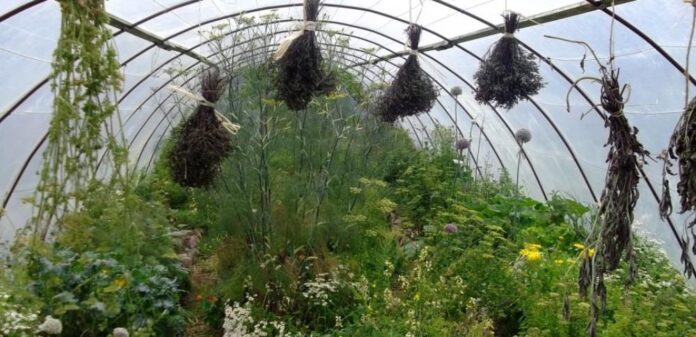
Growing herbs in Ireland can be very rewarding enterprise. It can be a successful business with a surprisingly small amount of land. The relatively constant temperatures and our moist climate suits many herbs, though Mediterranean herbs need extra care with drainage and sun best grown in Polly tunnels.
Herbs growing in Ireland is surprisingly easy because our fairly constant temperature agrees with most herbs. The key is providing sunshine and good drainage, especially for Mediterranean herbs.
Commercial Herb Growing Business Model for Ireland
A Financially Viable Income Generator
Based on successful Irish examples like O’Hanlon Herbs (2-acre farm in Wicklow, producing 4.5 million potted herbs + 5 million cut herb packets/year to Tesco, Aldi, Lidl and Dunnes), here’s a realistic business model for starting a financially viable herb farm in Ireland.
- BUSINESS STRUCTURE
Phase 1: Startup (Years 1–2)
- Scale: 0.5–1 acre protected growing (glasshouses/tunnels)
- Employees: 1–2 (you + 1 part-time)
- Focus: Direct-to-consumer (farmers’ markets, local restaurants, online)
- Goal: €30,000–€50,000 annual revenue
Phase 2: Growth (Years 3–5)
- Scale: 1–2 acres protected + 1–2 acres’ open field
- Employees: 4–6 full-time
- Focus: Wholesale to regional supermarkets + food service
- Goal: €100,000–€250,000 annual revenue
Phase 3: Commercial (Years 6+)
- Scale: 2–5 acres (like O’Hanlon Herbs)
- Employees: 10–20 full-time
- Focus: National retail chains (Tesco, Aldi, Lidl, Dunnes)
- Goal: €500,000–€1.5M+ annual revenue
- TOP 10 HERBS TO GROW FOR PROFIT IN IRELAND
High-Value Culinary Herbs (Fresh Retail)
| Herb | Why It’s Profitable | Growing Notes for Ireland |
| Basil | Most popular culinary herb; sells itself; high demand | Grow in glasshouse/sunny window (above 5°C); doesn’t thrive outdoors in Irish climate |
| Parsley | Steady seller; biennial (multiple cuttings) | Cool soil, moderate moisture; sow March/April; several cuttings before seed May/June |
| Chives | Steady seller; can do in cooler weather | Moist, well-drained soil; sun or light shade; cut back after flowering for second flush |
| Thyme | Popular, perennial; trim after flowering | Well-drained soil, full sun; very hardy; lasts several years |
| Rosemary | High value; perennial; Mediterranean | Very well-drained soil, sheltered sunny spot; mulch in autumn; raise pots on pot feet over winter |
| Sage | Evergreen perennial; high demand | Well-drained soil, sunny spot; prune back in spring for fresh growth |
| Mint | Steady seller; spreads rapidly (keep in pot) | Cool, rich soil; keep in pot or bottomless container; divide every 2 years |
| Coriander | Popular; good for digestion/medicinal | Sun, well-watered; sow March–July for May–Oct harvest; prone to bolting, keep well watered |
| Oregano | Popular Italian cooking herb | Well-drained soil, full sun; perennial; easy to grow outdoors |
| Lavender | Called “Swiss army knife” of herbs (so many uses) | Well-drained soil, full sun; prune in spring just before growth; not winter |
Medicinal Herbs (Growing Market)
| Herb | Why It’s Profitable | Growing Notes |
| Calendula | Growing popularity; medicinal values | Easy to grow; medicinal teas, tinctures |
| St John’s
Wort |
Mood-boosting substance | Perennial; medicinal use |
| Chamomile | Medicinal, calming | Easy annual; medicinal teas |
| Catnip | Sedative for humans; cat product | Hard to grow; medicinal use |
- REVENUE STREAMS (Multiple Income Sources)
Stream 1: Fresh Potted Herbs (Primary)
- Production: 10–15 varieties (rosemary, thyme, parsley, basil, mint, chives, sage, oregano, lavender, coriander, etc.)
- Output: 65,000 pots/week (like O’Hanlon Herbs mature production)
- Price: €3–€5 per pot (retail)
- Annual Revenue: €800,000–€1.5M (at commercial scale)
Stream 2: Cut Fresh Herbs (Packets)
- Production: 15 varieties (sliced/packed)
- Output: 80,000 packets/week (like O’Hanlon Herbs)
- Price: €2–€4 per packet (retail)
- Annual Revenue: €600,000–€1.2M (at commercial scale)
Stream 3: Dried Herbs (Packaged)
- Production: Packaging dried versions of top herbs
- Price: €5–€10 per packet
- Annual Revenue: €50,000–€150,000 (adds 10–20% to revenue)
- Revenue Multiplier: 2x–5x revenue per pound compared to fresh
Stream 4: Essential Oils & Extracts (High Value)
- Production: Distillation of lavender, sage, oregano, etc.
- Price: €50–€200 per bottle (small)
- Annual Revenue: €20,000–€80,000 (premium product)
Stream 5: Herbal Teas & Tinctures (Wellness)
- Production: Blending chamomile, calendula, St John’s wort, etc.
- Price: €8–€25 per tea/tincture
- Annual Revenue: €30,000–€100,000
Stream 6: Agri-Tourism (Diversification)
- Activities: Herb-picking tours, wellness workshops, farm stays
- Price: €15–€50 per person
- Annual Revenue: €10,000–€50,000
Stream 7: Contract Growing for Pharmaceutical Companies
- Production: Specific medicinal herbs for pharmaceutical contracts
- Price: Contract-based (steady income)
- Revenue Potential: €50,000–€200,000/year (long-term partnerships)
- STARTUP COSTS (Phase 1: 0.5–1 Acre)
Fixed Capital Costs – can be built up in phases – can be self financing
| Item | Cost (€) | Where to Buy |
| Glasshouse (1,000m²) | €40,000–€80,000 | Local horticultural suppliers |
| Tunnels (2 units, 500m²) | €10,000–€20,000 | Irish suppliers |
| Irrigation System | €3,000–€6,000 | Bord Bia approved suppliers |
| Drying Racks & Equipment | €2,000–€5,000 | Local metalwork |
| Packaging Machine | €5,000–€15,000 | Food processing suppliers |
| Cold Storage (10m³) | €8,000–€15,000 | Refrigeration suppliers |
| Tractor (small, 20hp) | €15,000–€25,000 | Agricultural dealers |
| Packaging & Branding | €2,000–€5,000 | Print shops |
| Soil & Compost | €1,500–€3,000 | Local suppliers |
| Fencing & Infrastructure | €3,000–€6,000 | Agricultural suppliers |
| Total Fixed Costs | €90,000–€180,000 |
Variable Startup Costs
| Item | Cost (€) |
| Seeds/Starter Plants | €1,500–€3,000 |
| Organic Compost & Soil | €2,000–€5,000 |
| Raised Beds/Containers | €3,000–€10,000 |
| Labor (Year 1) | €15,000–€25,000 |
| Marketing & Branding | €2,000–€5,000 |
| Insurance | €1,500–€3,000 |
| Utilities | €3,000–€6,000 |
| Total Variable Costs | €28,000–€52,000 |
TOTAL STARTUP (Phase 1)
€118,000–€232,000
- EXPECTED RETURNS (Phase 1)
Annual Revenue (0.5–1 Acre)
| Revenue Stream | Volume | Price | Annual Revenue |
| Potted Herbs | 13,000 pots/week | €3.50 | €182,000 |
| Cut Herbs (Packets) | 16,000 packets/week | €2.50 | €130,000 |
| Dried Herbs | 500 packets/week | €7.50 | €19,500 |
| Essential Oils | 50 bottles/month | €100 | €6,000 |
| Herbal Teas | 200 packets/month | €15 | €3,600 |
| Agri-Tourism | 50 visitors/month | €30 | €18,000 |
| Total Annual Revenue | €359,100 |
Annual Expenses (Year 1–2)
| Expense | Annual Cost (€) |
| Labor (2 people) | €35,000 |
| Utilities (heating, water, electricity) | €10,000 |
| Organic compost & soil | €5,000 |
| Packaging materials | €4,000 |
| Marketing & advertising | €4,000 |
| Insurance | €3,000 |
| Maintenance & repairs | €5,000 |
| Loan repayments | €15,000 |
| Total Annual Expenses | €86,000 |
Net Profit (Phase 1)
€359,100 – €86,000 = €273,100/year
Profit Margin: ~76%
- GOVERNMENT SUPPORT & GRANTS (Ireland)
Available Grants
- Department of Agriculture, Food and Marine (DAFM) grants for horticulture
- Bord Bia Quality Assurance Scheme (food safety certification)
- TÉAGASC horticulture advice and business planning support
- Regional Enterprise Development grants for small businesses
Key Requirements
- Bord Bia Irish certification (provenance is key differentiator)
- Food safety audit to BRC standard
- Organic certification for premium pricing (30–100% price premium)
- MARKETING STRATEGY
Target Markets
- Primary: Irish consumers (local, Irish-grown provenance)
- Secondary: Chefs, restaurants, food service
- Tertiary: Health/wellness brands, spas, pharmacies
Key Selling Points
- “Irish Provenance”: Key differentiator vs. imported herbs
- Freshness: Grown + packed daily to order (unlike imported)
- Local: Irish retailers see benefit in domestic supplier
- Quality: Bord Bia certified, BRC audited
Channels
- Farmers’ Markets (local)
- Online Store (e-commerce, nationwide delivery)
- Direct to Restaurants (food service)
- Wholesale to Supermarkets (regional/national)
- Social Media (Instagram, Facebook for brand building)
- OPERATIONAL MODEL
Production Cycle
- Potted Herbs: Year-round production in glasshouses
- Cut Herbs: Seasonal (June–September peak) + protected growing (spring/autumn)
- Hardy Cut Herbs: Winter availability (thyme, rosemary, sage)
Automation
- Seed sowing: Automated (reduces labor, ensures uniformity)
- Packing: Bespoke herb packaging for optimal freshness
- Irrigation: Automated watering systems
Quality Control
- Daily to order: Packaged fresh daily to customer orders
- Food safety: BRC audited
- Agronomic checks: Rigorous quality control
- SCALING PATHWAY (O’Hanlon Herbs Model)
Phase 1: Back Garden (1988)
- Started in back garden in Co. Dublin
- Door-to-door sales of potted herbs
- Part-time work elsewhere for support
Phase 2: Commercial Site (1992)
- Moved to Glenealy, Co. Wicklow (suitable site)
- Quinnsworth trial (10 stores) → full listing
Phase 3: Growth (2000–2008)
- 2000: 20,000 packet herbs/week
- 2008: 1,000 potted pots/week
- Herb sales took off in Ireland around 2000 (more adventurous cooking)
Phase 4: Sophisticated Unit (2008)
- Leap from basic seasonal growing to year-round production in glasshouses
- Automation of seed sowing for uniformity
Phase 5: Commercial Scale (Current)
- 1 hectare under glass
- 4.5 million potted herbs/year
- 5 million cut herb packets/year
- Staff: 55 employees
- Customers: Tesco, Dunnes, Aldi, Lidl
- KEY SUCCESS FACTORS
What Makes It Work
- Protected Growing: Year-round production via glasshouses (critical for Ireland’s climate)
- Irish Provenance: Key differentiator vs. imported herbs
- Daily to Order: Packaged fresh daily (superior to imported)
- Multiple Revenue Streams: Fresh + dried + essential oils + teas + agri-tourism
- Automation: Reduces labor, increases uniformity
- Quality Certification: Bord Bia + BRC for retailer trust
- Local Retailer Support: Irish retailers value domestic supplier
Risks to Manage
- Herbs are fragile and perishable→ need local growing + daily packing
- Climate: Mediterranean herbs need protection (glasshouses)
- Competition: Imported herbs (cheaper but inferior quality)
- Labor: High labor costs in Ireland
- Seasonality: Protected growing essential for year-round supply
- FINANCIAL SUMMARY
| Metric | Phase 1 (0.5–1 Acre) | Phase 2 (1–2 Acres) | Phase 3 (Commercial) |
| Startup Cost | €118,000–€232,000 | €250,000–€500,000 | €1M–€3M |
| Employees | 1–2 | 4–6 | 10–20 |
| Annual Revenue | €300,000–€500,000 | €500,000–€1M | €1M–€3M+ |
| Net Profit | €150,000–€250,000 | €250,000–€500,000 | €500,000–€1.5M+ |
| Profit Margin | ~70% | ~70% | ~70% |
| ROI (Year 3) | ~150% | ~200% | ~250% |
Estimate: A well-maintained 1/10-acre herb garden can generate $20,000+ annually (≈€18,000) if you grow high-demand herbs and market efficiently.
- ACTION PLAN (First 12 Months)
Months 1–3: Planning
- Complete business plan (use Teagasc templates)
- Secure land (0.5–1 acre minimum)
- Obtain business registration + insurance
- Order glasshouse/tunnel equipment
Months 4–6: Infrastructure
- Build glasshouse/tunnels
- Install irrigation & cold storage
- Register with Bord Bia Quality Assurance
- Purchase starter plants/seeds
Months 7–9: Production
- Start first crop (potted herbs in glasshouse)
- Begin marketing (farmers’ markets, online)
- Establish relationships with local restaurants
Months 10–12: Sales & Scaling
- Launch e-commerce store
- Apply for wholesale contracts (regional supermarkets)
- Expand production (add 2nd crop)
- Begin drying/essential oil production
- FINAL THOUGHTS
Herb farming is financially viable in Ireland because:
- High value per pound vs. vegetables/grains
- Low startup costs (€1,000–€3,000 for small operation)
- Multiple revenue streams (fresh, dried, oils, teas, etc.)
- Year-round demand from chefs, wellness brands, consumers
- Ireland’s climate suits many herbs (constant temperature agrees with plants)
- Protected growing enables year-round production
Key takeaway: Start small (0.5–1 acre), focus on Irish provenance, grow under glass or polly tunnelsfor year-round supply, and diversify revenue streams (fresh + dried + oils + teas + agri-tourism). O’Hanlon Herbs proves the model works at scale in Ireland.
Contact Resources:
- TÉAGASC Horticulture: www.teagasc.ie
- Bord Bia: www.bordbia.ie
- O’Hanlon Herbs: www.ohanlonherbs.ie
- Fernhill Garden Centre: www.fernhill.ie (herb starting advice)