
Part 1 of a 3-part series by Tomas O’Riain
Ireland cleared Dublin’s tenements through a long slum-clearance and public-housing program that accelerated after independence. It took decades to finish and the last tenements were not fully gone until the 1960s.
How it worked
After the Free State was established, Dublin Corporation and later the state used housing committees, slum-clearance powers, and large local-authority building schemes to replace condemned tenements.
The 1931 and 1932 Housing Acts were pivotal because they gave local authorities stronger powers to acquire unhealthy areas, demolish or repair bad housing, and get state financial support for rehousing.
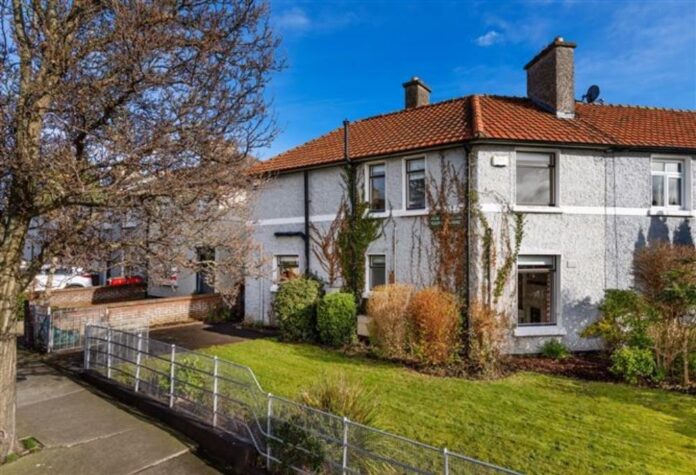
Rehousing happened through a mix of inner-city flats and, more importantly, suburban housing estates such as Crumlin, Ballyfermot, Ballymun, Coolock, Darndale, Drimnagh, and Finglas.
Dublin’s 700 families in one major inner-city renewal area were rehoused during a later redevelopment wave, showing that clearance often happened in stages rather than all at once.
The policy approach
The Free State’s approach was basically: clear the worst buildings, then move residents into new council housing built by local authorities.
Early progress was slow because the post-1913 period was shaped by war, revolution, and weak housing provision, but by the 1930s slum clearance became much more systematic.
The housing policy also shifted toward the garden suburb ideal, so many rehousing schemes were low-density and on the city’s edges rather than replacements in the same street.
This means many families were not just rehoused; they were also moved geographically, changing the social map of Dublin.
What the result looked like
The tenements were not cleared by one dramatic action but by a decades-long pipeline of surveys, condemnations, demolitions, and new-build housing.
By the time the process was largely complete, the old tenement system had been replaced by a city of public housing estates and rebuilt inner-city areas.
That did solve the worst housing conditions, but it also created new issues of suburban isolation in some estates.
The Financing of Irelands Housing
Ireland financed Dublin’s tenement clearance with a state-led, loan-backed housing programme that relied on cheap public borrowing, central government grants, and favourable financial terms for local authorities, rather than on the country’s own thin cash reserves.
The main financing tools
The Free State used new Housing Acts (1931 and 1932) that gave local authorities:
Powers to clear unhealthy areas, demolish or repair bad houses, and compulsorily purchase land.
State financial support for building new housing, included substantial grant contributions to cover part of annual loan charges with variable contributions depending on the type of housing.
Under the 1932 Act up to two-thirds of annual loan charges could be covered for housing people from slum clearances. For other housing under the Housing of the Working Classes Acts, the state contributed one-third. For rural labourers’ housing under the Labourers Acts, the state contributed three-fifths. This meant that for tenement clearance and rehousing, local authorities only had to pay a small fraction of the cost out of their own budgets.
Cheap public borrowing
The state raised money through public loans at relatively low interest rates (often backed by the British Treasury until the early 1930s, then by the Irish government’s own credit).
State borrowing to fund central grants and subsidies for housing.
This was not funded by current tax revenue alone; it was mostly capital finance – borrowing for long-term investment, with the cost spread over decades.
- Central government cover for local authorities
Dublin Corporation and other local authorities were often too poor to fund large-clearance schemes themselves. The state solved this by:
Making the central government the main payer through grants and loan subsidies.
Ensuring that local authorities could borrow without having to pay full loan charges out of their own budgets.
The “broke” country was not paying everything out of current income; it was:
Borrowing long-term.
Using central grants to reduce the burden on local authorities.
Spreading the cost over many years.
Scale and timing
The 1932 Act aimed to meet the state’s entire housing need – an estimated 75,000 houses within ten years.
By 1940, about 41% of Ireland’s housing stock had been built by the State, benefiting a cross-section of the population with affordable rents.
The programme was large but gradual, spreading costs over decades and using the state’s borrowing power rather than trying to pay everything immediately.
Why can’t Ireland build social housing now based on the successful models of the past?
Ireland can still build social housing now, but it struggles to do so at the scale of the past because the system now has to pass through:
- higher costs,
- slower planning,
- tighter regulation,
- land constraints,
- and a more fragmented delivery model.
The old state-led model relied on much heavier public intervention and cheaper delivery conditions; today the biggest barriers are viability, finance, and getting serviced land through a slow approvals process.
Why the old model was easier
- In the earlier era, the State could act more directly and build in large blocks, often on cheaper land at the urban edge.
- The housing system was more willing to use standardised design and large estates, which helped scale.
- Local authorities and the central state were more prepared to fund and own the process directly, rather than leaning so heavily on private delivery.
What makes it harder now
- Planning delays stall projects and add cost, and balancing viability with affordability is a major problem.
- Construction and financing costs are high, making schemes harder to pencil out.
- There are capacity constraints around serviced land, water infrastructure, and delivering at the pace needed in high-demand areas like Dublin.
- Many modern projects are smaller, bespoke, and spread across multiple sites, which makes mass production less efficient.
- In some areas, the State has also relied too much on the private market, which has not delivered enough social housing.
Why the old housing forms are not simply reusable
- The Marino-style model worked because it was low-rise, standardised, and tied to ownership or stable occupation, but it consumed a lot of land and suited a different urban context.
- The Ballymun-style model showed that simply building dense housing fast is not enough if amenities, maintenance, transport, and social supports are weak.
- So Ireland faces a bind: the old low-rise model is land-hungry, while the old high-rise model created social and maintenance problems when badly managed.
The Real Reason
The biggest difference is that the past was shaped by a state-build mindset, while the present is shaped by a mixed system in which public housing must compete with market logic.
That means even when the State wants to build, it has to work through a system that is slower, more expensive, and less centrally controlled than the one that produced the big post-war estates.
Bottom line
Ireland does not lack the ability to build social housing; it lacks the will and the delivery conditions that made earlier mass-building possible. The constraint is not just money but government ineptitude, the combination of planning, infrastructure, land, regulation, and a system that no longer builds in the same direct way as the past. There is no reason with government will that, that can’t be reversed and with modern high quality modular homes 50,000 could be built in one year, See Part 2.
Now That We Have Heard the Excuses What are the Solutions?
Modular housing is one of the most viable emergency tools for Ireland’s housing crisis. It’s already being deployed in Ireland for emergency accommodation and transitional housing, and it works internationally in emergencies because it’s fast, low cost, high quality off-site manufactured, and can be assembled quickly on-site—often in weeks rather than months or years. That’s how 50,000 houses can be built in Ireland in just one year.