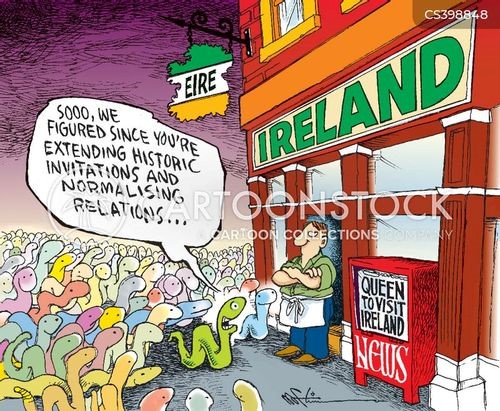
The Republic of Ireland Act 1948 could not legally change the name of the State to the “Republic of Ireland,” because it is claimed that the Constitution of Ireland (1937) already fixes the official name. What the law actually says in Article 4 of the Constitution (1937): “The name of the State is Éire, or in the English language, Ireland.” Republic of Ireland Act 1948: “It is hereby declared that the description of the State shall be the Republic of Ireland.” The Act used the word “description” rather than “name,” deliberately avoiding conflict with Article 4 of the Constitution. Therefore, there is no such legal entity as the Republic of Ireland, it’s a fiction. The 1948 Act was a theatrical act of smoke and mirrors to deceive the population. It was a hot air political stunt.
De Facto Democracy
My claim that Ireland was a de facto democracy and not a republic from 1937 to 1949 is supported by scholarly analysis. The 1937 Constitution established a democratic state, but it did not legally abolish the Crown or declare a republic until 1949 and then it only declared a republic with no official standing because it did not and could not establish a republic and did not and at that point could not legally abolish the Crown.
The official name vs. description
| What | Official legal status |
| Name of the State | Éire (Irish) or Ireland (English) — fixed by Article 4 of the Constitution. |
| Description | Republic of Ireland — the external description declared by the 1948 Act, not the legal name. |
Is Ireland a Republic?
No, Ireland is not a republic no matter what the 1948 description states. The only official “Republic of Ireland” is a soccer team. The name Ireland is the State’s official name on Irish passports, treaties, and EU documents. The description Republic of Ireland is used to distinguish the State from Northern Ireland in international contexts, but it is not the legal name of the State and therefore it has no legal status. Ireland could not legally name itself the “Republic of Ireland” since the 1937 Constitution already fixes the name as Ireland, and the 1948 Act only added a description. It’s just like deluded or mentally deranged people describing themselves as “they – them”. Descriptions do not change facts.
Ireland a Democracy or a Republic
A democracy and a republic are not the same entity, and in this regard Ireland’s status has been a matter of legal and political debate. Some scholars argue Ireland was not a republic under the 1937 Constitution nor could it claim to be. The Irish Journal of Public Philology states: “Contrary to popular view, the name of this State is not ‘the Republic of Ireland’, nor could it be. Ireland was not a republic.” The 1937 Constitution created a democratic state with a President, but it did not explicitly abolish the Crown or declare a republic. The UK still considered Ireland part of the British Commonwealth until 1949.
The 1948 Act was declaratory of Ireland’s status as a republic, but it did not create a new republic. It is ambiguously claimed that Ireland was already a republic in practice, even if not in formal legal terms.
The 1948 Act
The 1948 Act renounced allegiance to the Crown by repealing the law that recognized the British monarch as Head of State in Ireland’s external relations, and transferring that power to the President of Ireland. The Irish state passed the Republic of Ireland Act 1948 as an act of its own sovereign parliament (the Oireachtas), and under international law, Ireland had the right to end its constitutional links with the British Crown. The UK did not try to stop the Republic of Ireland Act. Instead, the UK Parliament passed the Ireland Act 1949, which recognized Ireland as a republic. However, it decided that Irish citizens would not be treated as “aliens” under British law. It also confirmed that Northern Ireland would remain part of the UK unless its parliament voted otherwise
The legal principle
Under international law and Commonwealth practice at the time, a dominion could leave the Commonwealth unilaterally without needing the Crown’s consent. Ireland’s 1948 Act was therefore a lawful exercise of that right.
The Act was legal because Ireland had the sovereign right to legislate for itself, and the UK did not need to agree to Ireland leaving the Commonwealth.
The term “the Republic of Ireland” appears explicitly in the Ireland Act 1949 in two key sections: Section 1(3) “The part of Ireland referred to in subsection (1) of this section is hereafter in this Act referred to, and may in any Act, enactment or instrument passed or made after the passing of this Act be referred to, by the name attributed thereto by the law thereof, that is to say, as the Republic of Ireland.” Section 2(1) “It is hereby declared that, notwithstanding that the Republic of Ireland is not part of His Majesty’s dominions, the Republic of Ireland is not a foreign country for the purposes of any law in force in any part of the United Kingdom…”
Full Act title
The Act itself is titled: “An Act to recognise and declare the constitutional position as to the part of Ireland heretofore known as Eire, and to make provision as to the name by which…”
So yes, the Ireland Act 1949 explicitly uses the term “the Republic of Ireland” in Sections 1(3) and 2(1), formally recognizing Ireland under that description.
That phrase means that Irish citizens are treated differently from other foreign nationals in UK law. They are not considered “foreigners” or “aliens” for legal purposes. Just more ambiguity?
What it means practically
| Area | Irish citizens | Other foreign nationals |
| Residency rights | Automatic right to live in the UK without visas | Need visas and immigration permission |
| Work rights | Can work without restrictions | Subject to work visa requirements |
| Public benefits | Access to most UK benefits and services | Restrictions apply |
| Criminal justice | Same protections as UK citizens | May face different treatment |
| Voting | Can vote in UK elections (except certain offices) | Generally cannot vote |
Is any other country not foreign?
No. Ireland is the only country in UK law that is explicitly declared “not a foreign country.” Every other country (France, Germany, USA, etc.) is treated as foreign under UK law.
This special status exists because Ireland and the UK share a common border (in Northern Ireland) they have a long history of close relationship. The Common Travel Area allows free movement between Ireland and the UK. Irish citizens in the UK have rights similar to British citizens in many areas
Why this was done
The Ireland Act 1949 was passed to protect Irish citizens’ rights in the UK after Ireland left the Commonwealth. Without Section 2, Irish citizens would have been treated as foreigners, losing their automatic right to live and work in the UK.
So yes, Ireland is unique in UK law as the only country that is not considered foreign. All other countries are foreign.
The UK Recognizes the State, Not the Description
Since the “Republic of Ireland” is only a description (not the legal name) under Irish law, how can the UK recognize it as an independent country? The answer is that the UK recognizes the State, not the description.
The UK recognizes Ireland (the sovereign State) as an independent country. The term “Republic of Ireland” is just the description Ireland uses for itself internationally, but the UK recognizes the State’s sovereignty, not the name.
What the Ireland Act 1949 actually says
| Section | What it does |
| Section 1(1) | Declares that the country known in British law as “Éire” ceased to be part of His Majesty’s dominions (i.e., ceased being a Commonwealth member) on 18 April 1949. |
| Section 1(3) | States that the country is referred to in UK law as “the Republic of Ireland” (using Ireland’s own name/description). |
| Section 2(1) | Declares that “the Republic of Ireland is not a foreign country” for UK law purposes. |
How this works
The UK recognizes Ireland as an independent sovereign state. Ireland calls itself “Ireland” legally (Article 4 of the Constitution), but uses “Republic of Ireland” as its description for international purposes. The UK accepts that description for convenience, but recognizes the State’s sovereignty, not the name.
Summary
| Ireland’s legal name | Ireland’s description | UK’s recognition |
| Ireland (Article 4 of Constitution) | Republic of Ireland (1948 Act) | Ireland as an independent sovereign state |
So the UK recognizes Ireland (the State) as an independent country. The term “Republic of Ireland” is just the description Ireland uses, which the UK accepts for practical purposes.
Democracy vs. Republic
| Feature | Democracy | Republic |
| Definition | Government by the people, usually through voting | State where power is held by the people, but with a head of state who is not a monarch |
| Head of State | Not specified (could be monarch or president) | Must be a president or elected official, not a monarch |
| Ireland 1937 | Created a democratic system with elections | Created a President but did not explicitly abolish the Crown |
| Ireland 1949 | Same democratic system | Formally declared a republic and ended Commonwealth links |
Benefits of Ambiguity
Ireland’s identity as a “state of ambiguity” described historically ‘when you can’t lie for religious and moral reasons and can’t tell the truth for political and survival reasons’ reliance on deliberate vagueness or ambiguity becomes necessary for survival. So we Irish learned to navigate complex constitutional, geopolitical, and societal challenges masterfully with ambiguity. As a result of our history navigating ambiguity has become an inherent part of Ireland’s political DNA, serving as a survival mechanism in the past and a political strategy in the present.
Constitutional & Naming Ambiguity
During the drafting of the 1922 Treaty, the name ‘Saorstát Éireann’ an intentionally ambiguous term that could be interpreted as a step toward a full republic or something lesser.
The 1937 Constitution defined the name of the State as simply Éire and Ireland in the English language, which left the door open for a united Ireland while officially encompassing only 26 counties.
In 1948 the Republic of Ireland was declared but only as a description whatever that means.
Geopolitics & “Neutrality”
While traditionally framed as “neutrality,” Ireland is not a member of NATO but holds no constitutional barrier to participating in EU defence initiatives while the EU is trying to create an army, maybe the Fourth Reich. Political reliance on this strategic ambiguity has served Ireland well by maintaining its reputation as an honest broker and peacekeeper on the global stage.
Constructive Ambiguity vs Pragmatic Ambiguity
In Anglo-Irish relations and Northern Ireland, ambiguity has been a valuable diplomatic tool. The Good Friday Agreement relies on “constructive ambiguity,” allowing unionists and nationalists to sign a historic pact while holding fundamentally different interpretations of Northern Ireland’s future. The agreement facilitated peace but left structural ambiguities that poses challenges during ongoing political rifts and shifts. Northern Ireland is neither in the EU nor outside of the EU. That’s UK and EU ambiguity with an Irish twist. They are learning from us but now we need to learn from ourselves and creatively take that to the next stage of pragmatic ambiguity.
The Swiss model of confederation could replace basic ambiguity with pragmatic ambiguity to create an ambiguous united Ireland. Pragmatic ambiguity is Irelands ambiguous future.