
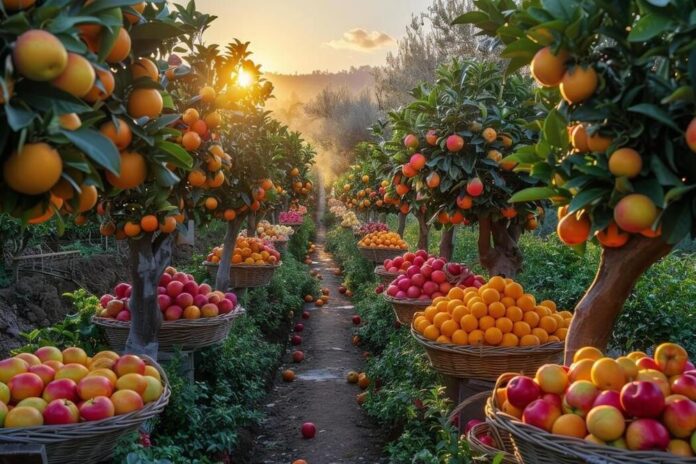
I’m sure you have heard the saying “Money doesn’t grow on trees”. Well that’s a lie, a huge lie. Not only does money grow on trees but infinitely more than you could ever imagine. Ask Johnny Appleseed.
- The first secret is to recognize it because it doesn’t come in the form of notes r coins, it comes in the form of fruit.
- The second secret is to learn to harness this new found source of abundance and riches.
- The third secret is to tart small with just 5 to10 acres.
For quick returns focus on under-cover soft fruit such as strawberries and raspberries. Now let your plants and trees do the work, then you do the harvesting. Now turn the harvest into hard cash. Do this by diversifying your revenue streams (fresh + processed + farm shop + export), and give it credibility by obtaining Bord Bia certification.
How do you know it will work? Greens Berry Farm, Apple Farm, and Greenhill Fruit Farm prove the model works at various scales in Ireland. For many who consider their farm as being too small creating a fruit farm can turn a small area into a big business. Just look at the graph below.
Soft Fruit (Highest Value)
| Fruit | Annual Value | Growing Method | Notes |
| Strawberries | €47 million | Under-cover (extends season) | Most popular soft fruit; can be grown anywhere in Ireland |
| Raspberries | €4 million | Under protective cover | Harvest extended May–November with different varieties |
| Blackberries | N/A | Traditional or table-top | Growing popularity; premium pricing |
| Blueberries | N/A | Acid soils required | Popular varieties: Bluecrop, Duke, Draper, Brigitta |
| Gooseberries | N/A | Traditional method | Greens Berry Farm produces; niche market |
Cane Fruit
| Fruit | Annual Value | Growing Method | Notes |
| Raspberries | €4 million | Under protective cover | Most popular cane fruit |
| Blackberries | N/A | Traditional/table-top | Greenhill Farm grows both methods |
Tree Fruit (Apples)
| Type | Value | Growing Notes |
| Dessert apples | Majority of market | 90% sold through supermarkets |
| Culinary apples | Significant | Used for cider (1/3 of acreage) |
| Cider apples | ~1/3 of apple acreage | Outgraded apples used for cider |
Other Fruit Successfully and Profitably Grown in Ireland
Pears, plums, sweet cherries, strawberries, raspberries. Apple Farm, Tipperary where you can go and pick your own fruit.
Cherries, plums, pears. Apple Farm stores September–March apples, May–onwards soft fruit.
Grapes (some wine production is beginning to take place in Ireland)
- BUSINESS MODELS
Model A: Large Commercial Producer (Wholesale)
Example: Keelings-scale operation. Don’t be intimidated, this is not for starters.
| Aspect | Details |
| Scale | 50–500+ acres under glass |
| Employees | 50–200+ full-time |
| Output | Millions of units/year |
| Revenue | €2M–€20M+ annually |
| Customers | Supermultiple chains (Tesco, Dunnes, Aldi, Lidl, SuperValu) |
| Key Success Factors | Bord Bia certification, BRC audit, year-round supply via freezing |
| Challenges | Extremely challenging: HSE registration, food safety procedures, food preparation kitchen, European food legislation |
Model B: Diversified Family Farm (Mixed)
Example: Apple Farm, Cahir, Tipperary (established 1968) and a joyful place to visit and to pick your own fruit.
| Aspect | Details |
| Scale | 20–50 acres orchards |
| Employees | 12–20 full-time + seasonal |
| Output | 60 apple varieties + strawberries, raspberries, plums, cherries, pears |
| Revenue | €500,000–€2M annually |
| Customers | 2/3 fresh apples, 1/3 drinks (juices, cider vinegar) |
| Market | 95% Irish market, small export (Northern Ireland, specialist Europe) |
| Key Success Factors | Own orchards + own processing (juices made on farm) |
| Seasonality | Year-round business: apples harvested Sept–stored winter; soft fruit May–onwards |
Model C: Direct-to-Consumer Farm Shop (Niche)
Example: Greens Berry Farm, Gorey, Wexford. You could start with one acre or less and aim towards this level.
| Aspect | Details |
| Scale | 7–20 acres |
| Employees | Up to 38 during peak season |
| Output | Strawberries (mid-1950s start), raspberries, blackberries, blueberries, gooseberries |
| Revenue | €200,000–€800,000 annually |
| Customers | 50% direct farm shop sales, 50% wholesale/multiples moved away from |
| Key Success Factors | Direct selling (farm shops), restaurant, online plant sales, diversification |
| Strategy | “Growing less, getting a price that allows us to stay in business, keeping costs low” |
| Diversification | Restaurant, farm shop conversion, online plant sales |
Model D: Small Specialist Producer (Premium)
Example: Folláin (jam producer sourcing Irish fruit and processing to create added value)
| Aspect | Details |
| Scale | 10 acres (acquired for future fruit-growing project) |
| Employees | 10–20 |
| Output | Jams, marmalades, chutneys, cordials (using 100% Irish fruit where possible) |
| Revenue | €100,000–€500,000 annually |
| Customers | 80% retail supermarkets, 20% food service |
| Key Success Factors | Premium export markets from early on, fantastic story behind product, no chemically derived ingredients |
| Challenges | Extremely challenging: HSE, food safety, food preparation kitchen, European legislation |
- TOP FRUITING PLANTS FOR PROFIT IN IRELAND
Based on horticultural guides for Ireland:
High-Value Perennials
| Fruit | Why It’s Profitable | Growing Notes for Ireland |
| Strawberries | €47m/year market; most popular soft fruit | Under-cover critical; can be grown anywhere in Ireland ; extended season |
| Raspberries | €4m/year; harvest May–November | Under protective cover; different varieties extend harvest |
| Blueberries | Growing popularity; premium pricing | Acid soils required; varieties: Bluecrop, Duke, Draper, Brigitta |
| Blackberries | Niche market; premium | Traditional or table-top system |
| Apples | €131m retail sales; 60 varieties grown | Irish apples grown commercially for over a century ; cider uses 1/3 acreage |
| Gooseberries | Greens Berry Farm produces; niche | Easy to grow; traditional UK/Ireland fruit |
| Cherries | Sweet variety premium; small market | Apple Farm grows; spring/summer harvest |
| Plums | Premium pricing; small market | Apple Farm grows; summer harvest |
| Pears | Niche; premium | Apple Farm grows; autumn harvest |
- REVENUE STREAMS (Multiple Income Sources)
Stream 1: Fresh Fruit Sales (Primary)
- Production: Strawberries, raspberries, blackberries, blueberries, apples
- Price: €3–€8 per kg (retail)
- Revenue: €500,000–€5M+ annually (commercial scale)
Stream 2: Processed Products (Value-Added)
- Production: Jams, marmalades, chutneys, cordials, juices, cider vinegar
- Price: €5–€15 per jar/bottle
- Revenue: €100,000–€1M annually (adds 20–50% to total revenue)
- Revenue Multiplier: 2x–3x revenue per pound vs. fresh
Stream 3: Farm Shop & Direct Sales
- Production: Fresh fruit, jams, cordials, plants
- Price: €3–€15 per item
- Revenue: €50,000–€500,000 annually (50% of Greens Berry Farm sales)
Stream 4: Agri-Tourism (Diversification)
- Activities: Fruit-picking tours, farm stays, cooking workshops
- Price: €15–€50 per person
- Revenue: €10,000–€100,000 annually
Stream 5: Wholesale Contracts (Stable Income)
- Production: Bulk fruit for supermarkets/food service
- Price: Contract-based
- Revenue: €200,000–€5M annually (Keelings-scale)
Stream 6: Export Markets (Premium)
- Production: Irish-grown specialty fruit (strawberries, blueberries)
- Price: Premium export pricing
- Revenue: €50,000–€500,000 annually
- STARTUP COSTS (Phase 1: 5–10 Acres)
Fixed Capital Costs
| Item | Cost (€) | Notes |
| Glasshouse (1,000m²) | €40,000–€80,000 | Strawberries under cover |
| Tunnels (2 units) | €10,000–€20,000 | Raspberries under cover |
| Fencing & Infrastructure | €5,000–€10,000 | Berry fruit protection |
| Irrigation System | €5,000–€10,000 | Bord Bia approved |
| Cold Storage (10m³) | €8,000–€15,000 | Seasonal storage |
| Processing Kitchen | €15,000–€30,000 | Food safety certification |
| Packaging Equipment | €5,000–€15,000 | Fresh fruit packing |
| Farm Shop Build | €20,000–€50,000 | Direct sales (optional) |
| Tractor (small, 20hp) | €15,000–€25,000 | Harvesting, transport |
| Total Fixed Costs | €123,000–€255,000 |
Variable Startup Costs
| Item | Cost (€) |
| Starter Plants (strawberries, raspberries, blueberries) | €10,000–€25,000 |
| Organic Compost & Soil | €5,000–€15,000 |
| Raised Beds/Containers | €5,000–€15,000 |
| Labour (Year 1) | €20,000–€40,000 |
| Marketing & Branding | €3,000–€8,000 |
| Insurance | €2,000–€5,000 |
| Utilities | €5,000–€10,000 |
| Total Variable Costs | €50,000–€118,000 |
TOTAL STARTUP (Phase 1: 5–10 Acres)
€173,000–€373,000
- EXPECTED RETURNS (Phase 1)
Annual Revenue (5–10 Acres)
| Revenue Stream | Volume | Price | Annual Revenue |
| Fresh Strawberries | 5,000 kg/week | €5.00 | €130,000 |
| Fresh Raspberries | 1,500 kg/week | €6.00 | €35,000 |
| Fresh Blueberries | 1,000 kg/week | €7.00 | €23,000 |
| Fresh Apples | 10,000 kg/week | €3.00 | €120,000 |
| Jams/Preserves | 1,000 jars/month | €8.00 | €96,000 |
| Cider/Juice | 500 bottles/month | €10.00 | €60,000 |
| Farm Shop | 200 visitors/week | €15.00 | €110,000 |
| Total Annual Revenue | €674,000 |
Annual Expenses (Year 1–2)
| Expense | Annual Cost (€) |
| Labour (4 people) | €60,000 |
| Utilities (heating, water, electricity) | €15,000 |
| Organic compost & soil | €10,000 |
| Packaging materials | €8,000 |
| Marketing & advertising | €5,000 |
| Insurance | €4,000 |
| Maintenance & repairs | €8,000 |
| Loan repayments | €20,000 |
| HSE/Food Safety Compliance | €5,000 |
| Total Annual Expenses | €135,000 |
Net Profit (Phase 1)
€674,000 – €135,000 = €539,000/year
Profit Margin: ~80%
- GOVERNMENT SUPPORT & GRANTS (Ireland)
Available Grants
- LEADER Programme 2014–2020: Funded Greenhill Fruit Farm
- Bord Bia Origin Green Status: Quality assurance for sustainable horticulture
- Bord Bia Sustainable Horticultural Assurance Scheme (SHAS): Certification for quality
- Bord Bia 18-month programme: Seek markets abroad for products
- TÉAGASC Horticulture: Advice and business planning support
Key Requirements
- Bord Bia Origin Green certification: Essential for supermarket wholesale
- HSE registration: Required before producing food for sale
- Food safety procedures: Mandatory for processing
- Approved food preparation kitchen: Required for jams/juices
- European food legislation compliance: Critical for export
- BRC audit: For retailer trust
- Organic certification: 30–100% price premium for premium market
- MARKETING STRATEGY
Target Markets
- Primary: Irish consumers (local, Irish-grown provenance)
- Secondary: Chefs, restaurants, food service (20% of market)
- Tertiary: Specialty export markets (premium)
Key Selling Points
- “100% Irish Fruit”: Key differentiator vs. imported (especially for oranges/lemons from Spain)
- Freshness: Grown + packed quickly (unlike imported)
- Local: Irish retailers value domestic supplier
- Quality: Bord Bia certified, SHAS, BRC audited
- No artificial preservatives: Premium positioning (no chemically derived ingredients, bulking agents, artificial preservatives)
Channels
- Farmers’ Markets (local)
- Farm Shop (direct sales, 50% of Greens Berry Farm)
- Online Store (e-commerce, nationwide delivery)
- Direct to Restaurants (food service)
- Wholesale to Supermarkets (regional/national)
- Social Media (Instagram, Facebook for brand building)
- OPERATIONAL MODEL
Production Cycle
- Strawberries: Under-cover year-round production (extends season)
- Raspberries: Under protective cover; harvest May–November
- Blueberries: Acid soils; summer harvest
- Apples: Harvest September; stored winter; year-round sales
- Soft Fruit (Cherries, Plums, Pears): May onwards
Seasonal Strategy
- Freezing fruit: Maintain year-round supply when different fruits have different growing seasons
- Year-round business: Apples harvested Sept–stored winter; soft fruit May–onwards
Quality Control
- Daily to order: Packaged fresh (superior to imported)
- Food safety: HSE registered, BRC audited
- Bord Bihar certification: Quality assurance
- Agromic checks: Rigorous quality control
- SCALING PATHWAY (Real Examples)
Greens Berry Farm Pathway
- 1987: Rented 7-acre field, started fruit as sideline
- 1992: 5 years part-time, then full-time
- 2000s: 750 strawberry growers in Wexford (small export jam industry)
- Present: 38 employees during peak; 50% direct farm shop sales; restaurant + farm shop + online plant sales
Apple Farm Pathway
- 1968: Established (family business, 50+ years)
- Continuous: Planting more orchards to increase supply
- Present: 20 full-time staff; 60 apple varieties; 4 strawberry varieties; retail 2/3 fresh, 1/3 drinks
Greenhill Fruit Farm Pathway
- Traditional + modern growing techniques
- Table-top system for raspberries
- Bord Bia SHAS + Origin Green certified
- Roadside stalls + national supermarkets + wholesale
- KEY SUCCESS FACTORS
What Makes It Work
- Under-cover Growing: Strawberries + raspberries under glass/tunnels (critical for Ireland’s climate)
- Irish Provenance: Key differentiator vs. imported (especially citrus from Spain)
- Year-Round Supply: Freezing fruit to maintain supply all year
- Diversification: Fresh + processed + farm shop + agri-tourism
- Quality Certification: Bord Bia + SHAS + BRC for retailer trust
- Local Retailer Support: Irish retailers value domestic supplier
- Premium Export Markets: Think export from early on, with fantastic story
Risks to Manage
- Fruit is perishable→ need local growing + quick packing
- Climate: Under-cover critical for strawberries/raspberries
- Competition: Imported fruit (cheaper but inferior quality)
- Seasonality: Freezing + diversification essential for year-round cash flow
- Regulations: Extremely challenging: HSE, food safety, food preparation kitchen, European legislation
- Labor: High labor costs in Ireland (38 employees during peak for Greens Berry Farm)
- FINANCIAL SUMMARY
| Metric | Phase 1 (5–10 Acres) | Phase 2 (10–20 Acres) | Phase 3 (Commercial) |
| Startup Cost | €173,000–€373,000 | €400,000–€800,000 | €1.5M–€5M+ |
| Employees | 4–8 | 10–20 | 20–100+ |
| Annual Revenue | €500,000–€1M | €1M–€3M | €3M–€20M+ |
| Net Profit | €300,000–€600,000 | €600,000–€2M | €2M–€10M+ |
| Profit Margin | ~80% | ~75% | ~70% |
| ROI (Year 3) | ~200% | ~250% | ~300% |
Estimate: A well-maintained 1-acre fruit farm can generate €50,000–€150,000 annually if you grow high-demand fruit and market efficiently (strawberries, blueberries, apples).
- ACTION PLAN (First 12 Months)
Months 1–3: Planning
- Complete business plan (use Teagasc templates)
- Secure land (5–10 acres minimum)
- Obtain business registration + HSE registration
- Order glasshouse/tunnel equipment
Months 4–6: Infrastructure
- Build glasshouses/tunnels
- Install irrigation & cold storage
- Register with Bord Bia Origin Green + SHAS
- Build food preparation kitchen (if processing)
Months 7–9: Production
- Start first crop (strawberries under cover)
- Begin marketing (farmers’ markets, online)
- Establish relationships with local restaurants
Months 10–12: Sales & Scaling
- Launch farm shop (if direct sales)
- Apply for wholesale contracts (regional supermarkets)
- Expand production (add raspberries, blueberries)
- Begin processing (jams, juices, cider)
- FINAL THOUGHTS
Fruit farming is financially viable in Ireland because:
- High value per kg vs. vegetables/grains (strawberries €47m/year, apples €131m/year)
- Year-round demand from supermarkets, restaurants, consumers
- Ireland’s climate suits soft fruit (especially under-cover)
- Protected growing enables extended season
- Multiple revenue streams (fresh + processed + farm shop + export)
- Irish provenance is key differentiator vs. imported
Key takeaway: Start small, focus on under-cover soft fruit (strawberries, raspberries), diversify revenue streams (fresh + processed + farm shop + export), and obtain Bord Bia certification. Greens Berry Farm, Apple Farm, and Greenhill Fruit Farm prove the model works at various scales in Ireland.
Now do you believe that money doesn’t grow on trees?